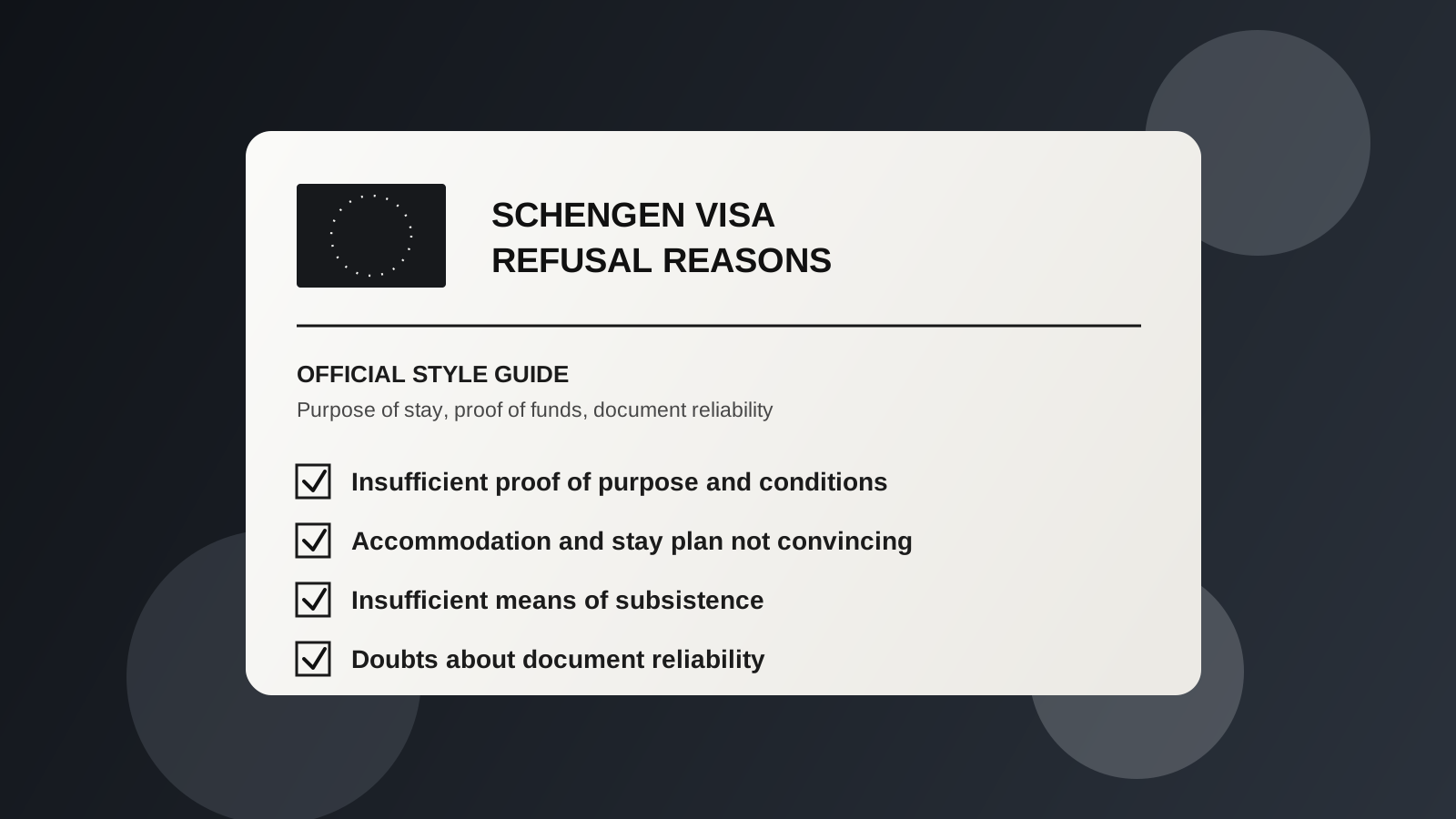
A Schengen refusal letter may contain more than one refusal ground at the same time. That usually means the consulate was not convinced by the overall file, not just one isolated detail.
This guide explains the refusal grounds highlighted in the attached refusal pattern, what each one means in practice, why it weakens a visa file, and what should be corrected before reapplying.
Which Refusal Grounds Are Marked in This Case?
These reasons all point to the same core question: why are you travelling, how will you stay, how will you pay, and can the consulate trust the documents submitted?
1. No Proper Justification for the Purpose of Stay and Its Conditions
What does this mean?
This reason means the consulate was not sufficiently convinced by the travel purpose itself. In simple terms, the file did not clearly explain why the applicant wanted to travel, what exactly would happen during the trip, where the applicant would stay, or how the trip would work in practice.
When does this usually appear?
- The travel plan is vague or too generic.
- The purpose is written in a very broad way such as “tourism” without supporting structure.
- There is no realistic route, event, invitation, or explanation for the visit.
- The selected visa purpose does not match the documents attached.
- The bookings do not genuinely support the stated reason for travel.
Example
If an applicant says the trip is for tourism but submits only a flight and a hotel booking without a coherent short itinerary, the consulate may decide that the purpose was not properly demonstrated.
How to improve it
- Write the purpose of travel clearly and specifically.
- Attach a short and logical itinerary.
- Make sure cities, dates, and duration make sense together.
- Use genuine supporting evidence such as hotel bookings, a conference agenda, or a real invitation where relevant.
2. The Intended Stay and Its Conditions Could Not Be Properly Established
Why is this different from the first reason?
This point is closely related to the first one, but it focuses more on the practical conditions of the stay itself, not just the headline reason for travel. The consulate is asking not only “why are you travelling?” but also “how exactly will this stay happen?”
What are the conditions of stay?
- Where the applicant will stay
- How long the stay will last
- Who is hosting or paying, if applicable
- Whether accommodation and transport logically match the plan
- Whether the stay duration matches the stated purpose
Common triggers
- Hotel bookings do not cover the full stay.
- The applicant lands in one city but stays in another without explanation.
- The duration is too long or unrealistic compared with the purpose.
- Accommodation proof is weak, incomplete, or unverifiable.
- An invitation letter is unclear or missing key details.
How to improve it
- Submit accommodation evidence that covers the whole trip.
- Match hotel dates with arrival and departure dates.
- If staying with someone, provide a clear invitation and host details.
- Keep the length of stay reasonable and proportionate to the declared purpose.
3. No Reliable Proof of Sufficient Means of Subsistence
What does this mean?
This is one of the most common refusal grounds. It means the consulate was not satisfied that the applicant had enough credible financial means to cover the trip, daily expenses, accommodation, and return.
| Financial Element | What the Consulate Usually Looks For |
|---|---|
| Bank statement | Regular movement, believable balance, and no unexplained sudden deposits. |
| Salary or income | Clear proof that matches the account history and work documents. |
| Trip budget | A travel cost that fits the applicant’s financial reality. |
| Sponsor support | A proper sponsor letter, proof of relationship, and the sponsor’s own finances. |
Typical weaknesses
- The balance is too low for the planned trip.
- The account has unusual or last-minute cash injections.
- There is no stable income behind the account.
- The salary shown in the file does not support the trip cost.
- The applicant plans a long and expensive trip without strong financial backing.
How to improve it
- Use a regular and recent bank statement.
- Avoid unexplained deposits just before application.
- Support the account with employment or business evidence.
- Reduce the trip duration if the budget is limited.
- Where there is a sponsor, document the sponsorship properly.
4. Doubts About the Reliability or Authenticity of Supporting Documents
Why is this reason serious?
This is one of the most serious refusal grounds because it does not only suggest a weak file. It suggests that the consulate has doubts about whether some documents are reliable, accurate, consistent, or verifiable.
This does not always mean proven forgery
In many cases, the refusal does not mean the consulate legally proved a document was fake. It can also mean the document looked unusual, inconsistent, unprofessional, badly translated, or impossible to verify.
What can trigger this?
- Salary letters that do not look professional or cannot be verified.
- Bank statements that do not match the declared income.
- Hotel or flight bookings with conflicting data.
- Name, passport number, or date differences across documents.
- Poor translations or unclear stamps and signatures.
- Documents that appear edited, altered, or unofficial.
How to improve it
- Review every document line by line before reapplying.
- Make sure all names, passport numbers, dates, and financial figures match across the file.
- Use verifiable bookings and genuine supporting records.
- Submit clear translations where required.
- Do not use unclear or low-quality documents just to fill gaps.
What Does It Mean When These Reasons Appear Together?
| Main Area | What the Refusal Suggests |
|---|---|
| Travel purpose | The visit was not explained clearly or convincingly enough. |
| Financial profile | The means of support were weak, insufficient, or not trustworthy. |
| Supporting evidence | The consulate had doubts about document reliability or internal consistency. |
When these grounds are combined in one refusal decision, it usually means the file needs rebuilding rather than a quick resubmission.
How to Rebuild the File Before Reapplying
- Reassess the real purpose of travel and make sure it is specific and well-documented.
- Review the bank statement and verify that income, balance, and travel cost make sense together.
- Check every document for contradictions, translation issues, or weak presentation.
- Make accommodation and itinerary cover the whole trip clearly.
- Do not resubmit the same logic and the same papers if the refusal grounds were already clear.
Conclusion
This type of refusal usually does not come from one tiny mistake. It points to a broader weakness in the file: unclear travel purpose, insufficient or unconvincing finances, and doubts about document reliability.
The right response is not simply to book again and apply quickly. The stronger approach is to fix each refusal point separately, rebuild the file carefully, and make sure the new application tells one clear, logical, and verifiable story.