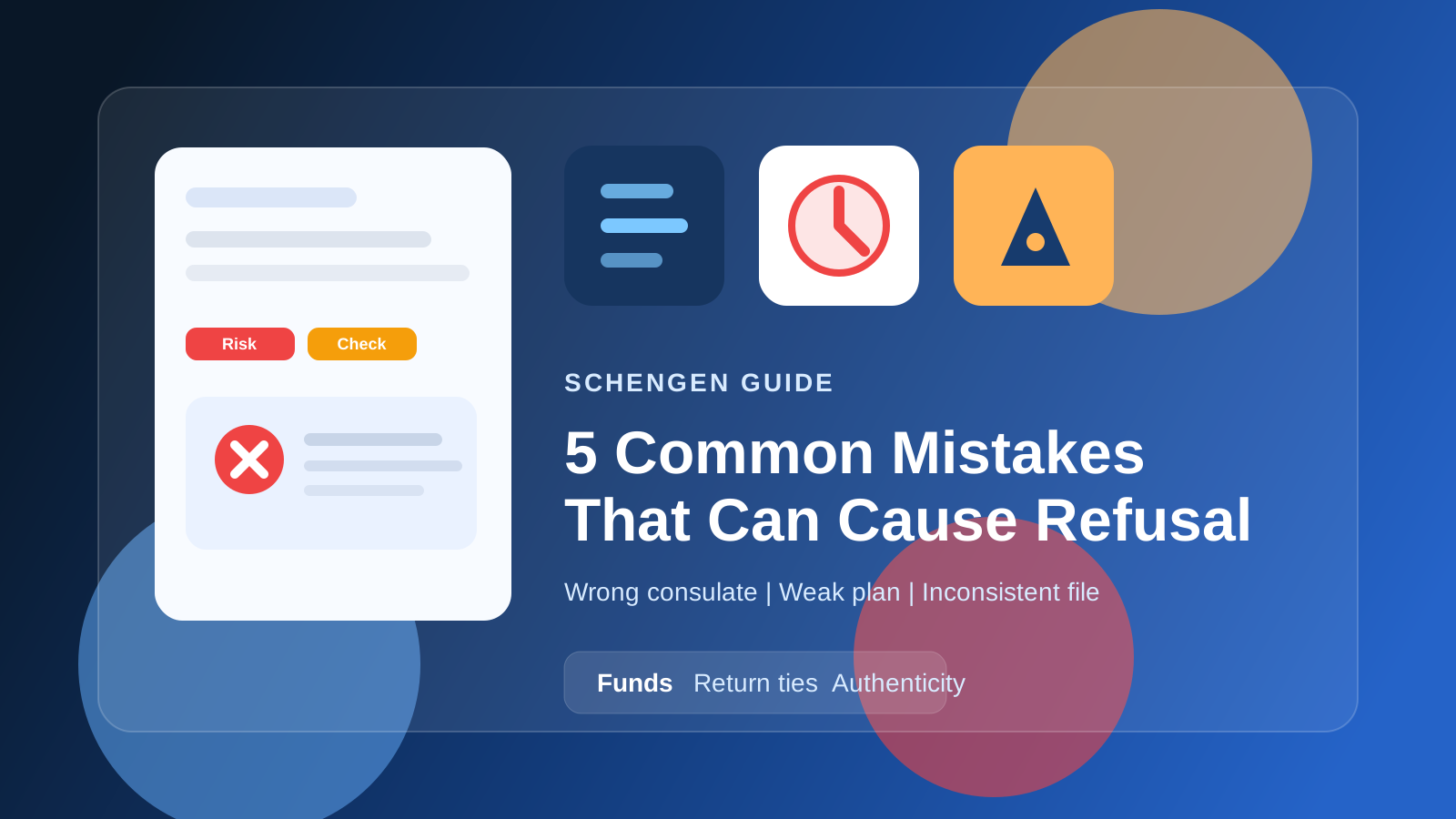
Schengen visa refusals usually do not happen because of one tiny mistake alone. In many cases, refusal comes from a weak overall file, contradictions between documents, an unclear travel purpose, or insufficient proof of finances and intention to return.
It is also important to correct a common misconception: Schengen visas are not simply “easy” or “hard” depending only on the country name. All Schengen states apply common EU short-stay visa rules, but file assessment can still vary by consulate, applicant profile, and document strength.
Why This Matters
According to the European Commission, the application should be submitted to the country of your main destination, the country where you will stay the longest, or the country of first entry if the stay length is equal across several states.
The legal refusal grounds themselves are listed in the EU Visa Code on EUR-Lex, which explicitly mentions weak justification of stay, insufficient means of subsistence, doubts about authenticity, and doubts about the applicant’s intention to leave before the visa expires.
1. Applying to the Wrong Country Just Because Appointments Are Easier
This is one of the biggest mistakes. Many applicants choose the embassy of a Schengen country simply because appointments are easier to find or because they heard that one country is “more flexible” than another. That is not how the system is supposed to work.
| Travel Situation | Correct Country |
|---|---|
| You will visit only one Schengen country | Apply to that country. |
| You will visit several countries but stay longer in one of them | Apply to the country of longest stay or main destination. |
| You will stay the same number of days in several countries | Apply to the first country you will enter. |
If your real trip is built around one country but your application is submitted through another for convenience only, that inconsistency can weaken the file from the start.
2. Submitting a Random or Illogical Travel Plan
A travel plan is not just a flight reservation and a hotel booking. The consulate looks at the overall logic of the trip: why this country, why this city, why this length, and whether the plan fits your financial and professional reality.
| Problem | Example |
|---|---|
| Random dates | A long trip without a clear reason. |
| Too many destinations | Trying to visit 5 countries in 7 days. |
| Flight and hotel mismatch | Landing in one city while accommodation is in another without explanation. |
| Timing that does not fit your profile | A long tourist stay during a period that conflicts with your work situation. |
| No convincing schedule | Stating “tourism” without a credible plan. |
The Visa Code makes clear that refusal can happen if the applicant does not justify the purpose and conditions of the intended stay.
3. Documents That Do Not Tell the Same Story
This is one of the most common weaknesses in Schengen files. A document may look acceptable on its own, but the problem appears when several documents do not match each other.
| Type of Conflict | Example |
|---|---|
| Date mismatch | Insurance starts after the planned trip or hotel does not cover the full stay. |
| Income mismatch | The salary in the employer letter does not make sense compared with the bank statement. |
| Employment mismatch | The declared job is not supported by the rest of the file. |
| Trip mismatch | Flight to one country while hotel booking is in another without a clear route. |
| Identity mismatch | Name or passport number differences across documents. |
Your form, itinerary, hotel, insurance, bank statement, work documents, and supporting papers should read like one coherent story.
4. Weak Proof of Finances or Weak Proof That You Will Return
Many applicants focus only on whether there is money in the account. Consulates usually look at a broader picture:
- Is the account movement normal and believable?
- Is the income understandable from the file?
- Is the amount realistic for the planned trip?
- Does the applicant have work, studies, business, family ties, or property that support return?
The EU Visa Code lists refusal grounds that include insufficient means of subsistence and reasonable doubts about the applicant’s intention to leave the Schengen territory before the visa expires.
What Strengthens This Part of the File?
| Applicant Type | Useful Supporting Documents |
|---|---|
| Employee | Employer letter, salary proof, social insurance if available, and a regular bank statement. |
| Business owner | Commercial registration, tax card, and personal or business statements. |
| Student | Enrollment certificate, sponsor letter, and the sponsor’s financial proof. |
| Applicant with spouse or children | Family ties and clear return obligations. |
| Applicant with property | Property ownership documents when relevant. |
5. Submitting False, Altered, or Unreliable Documents
This is the most serious mistake of all. A weak but honest file can often be improved. A file built on false documents can create long-term damage.
| Document Type | Typical Problem |
|---|---|
| Bank statement | Edited figures or fake stamps. |
| Employment letter | Not actually issued by the real employer. |
| Hotel reservation | Fake or unverifiable booking. |
| Flight reservation | Invented or manipulated itinerary. |
| Property documents | Altered copies or inaccurate information. |
| Invitation letters | Not authentic or not issued by the declared party. |
The Visa Code explicitly mentions refusal where the applicant presents a false, counterfeit, or forged travel document, or when there are reasonable doubts about the authenticity of the documents or the reliability of the statements.
Additional Mistakes Worth Watching
| Mistake | Possible Effect |
|---|---|
| Missing required translations | The file may be treated as incomplete. |
| Weak or unsuitable hotel booking | It weakens the travel plan. |
| Insurance that does not match the trip | It can lead to refusal or a request for completion. |
| Hiding a previous refusal | It damages credibility. |
| Overstating trip duration | It may raise doubts about the real purpose. |
| Family application without solid finances | It increases the burden of financial proof. |
| No clear explanation of who pays | It creates ambiguity around the file. |
Does Applying as a Family Increase Refusal Risk?
Not by itself. Many families receive Schengen visas when the file is organized and financially credible.
The real issue is that family applications require stronger preparation because the total trip cost is higher and the supporting documents need to show clear funding and clear reasons to return.
- A family application is not a refusal reason on its own.
- A weak family file, however, is often easier to doubt than a well-supported one.
How to Reduce the Risk of Refusal
- Apply through the correct country according to the real trip.
- Keep the travel plan realistic and proportional to your profile.
- Check all dates carefully across every document.
- Make sure the bank statement looks natural and regular.
- Submit a clear employer letter or real business documents.
- Never submit false or unverifiable documents.
- Do not rely on fake reservations.
- Prepare a short, clear itinerary.
- Review the official checklist for the specific consulate.
- If you were refused before, fix the actual reason before reapplying.
Final Takeaway
Schengen refusal is usually not about one country being “strict” in the abstract. It is much more often about the file itself: wrong jurisdiction, weak travel logic, inconsistent documents, insufficient proof of finances and return ties, or unreliable paperwork.
The strongest visa file is not the file with the most papers. It is the file that answers, clearly and honestly: why are you travelling, where are you going, how long will you stay, who is paying, where will you stay, and what proves you will return?