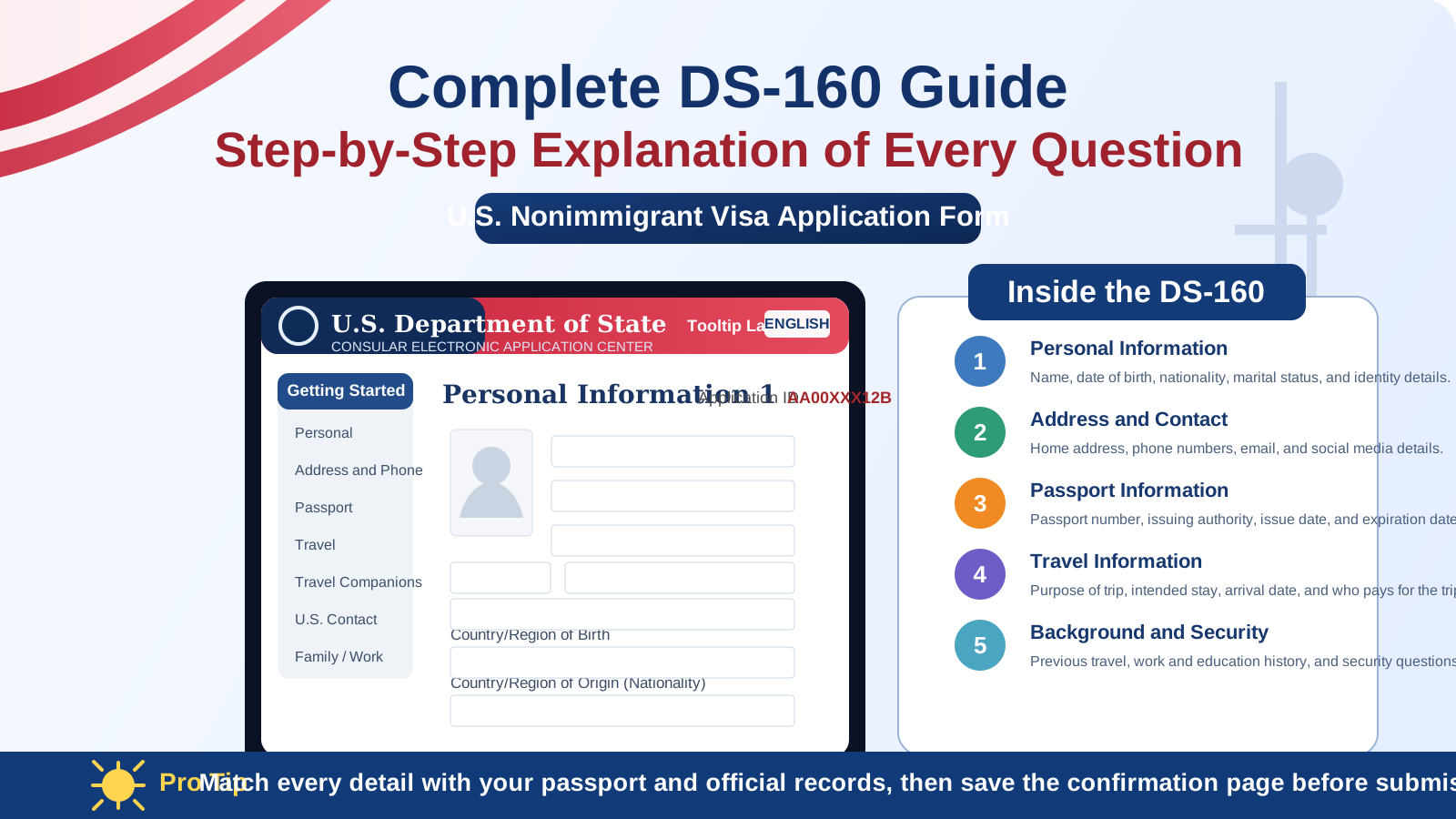
Complete Guide to the DS-160
Step-by-step explanation of every question in the same order as the official form.
What This Guide Covers
- 1. Personal informationName, birth details, nationality, and identity fields.
- 2. Address and contactResidence, phone numbers, email, and social media details.
- 3. Passport informationPassport number, issuing authority, issue date, and expiry date.
- 4. Travel informationTrip purpose, intended stay, and U.S. travel details.
- 5. Previous travelPast U.S. visas, visits, refusals, and prior immigration history.
- 6. Work and educationCurrent occupation, previous jobs, school, and training history.
- 7. Security questionsBackground, security, medical, immigration, and legal questions.
The DS-160 is the official online form used by the U.S. Department of State for nonimmigrant visa applications such as tourism, business, and temporary study visas. Almost all applicants for U.S. visas must complete this form online before booking their embassy or consulate interview.
In this guide, you will find a complete explanation of every DS-160 section and the meaning of each question, with practical guidance on what each field is asking for and how to answer it correctly, all in the same order used by the official U.S. visa form.
What Is the DS-160 Form?
The DS-160 is an electronic application form that contains detailed information about the visa applicant. The embassy uses this information to evaluate eligibility and run background and security checks before issuing a visa.
The form includes several core sections, including:
- Personal information
- Passport information
- Travel information
- Family details
- Work and education
- Previous travel history
- Security questions
Every section must be completed carefully because any mistake can delay processing or negatively affect your visa case.
Before You Start Filling Out the DS-160
Before opening the form, it is best to prepare the following:
- Your passport
- Travel details
- Your home address
- Employment details
- Education details
- Previous travel history
- Information about relatives
Having this information ready in advance makes the application faster and more accurate.
Page One: Starting the Visa Application
Select a Location Where You Will Be Applying
You must choose the U.S. embassy or consulate where you will apply for the visa.
Enter the Code Shown
This is the security code displayed on the screen to prevent automated use of the system.
Start an Application
This starts a brand-new visa application.
Retrieve an Application
This allows you to recover a previous application using your Application ID.
Page Two: Creating the Application File
Application ID
This is the unique number generated automatically for your form. Save it carefully because you will need it to return to your application later.
Security Question
You must choose a security question and answer it so you can retrieve the form if you lose the Application ID.
Section One: Personal Information
Surnames
Your family name exactly as written in the passport.
Given Names
Your personal names exactly as shown in the passport.
Full Name in Native Alphabet
Your full name in your native script, such as Arabic.
Have you ever used other names
This asks whether you have ever used another legal or official name in the past, such as a maiden name or a different documented name.
Telecode Name
This field applies only to certain countries that use special coded name systems.
Sex
Your gender.
Marital Status
Your marital status.
Date of Birth
Your date of birth.
City of Birth
Your city of birth.
State or Province of Birth
Your state, governorate, or province of birth.
Country of Birth
The country where you were born.
Country of Nationality
Your current nationality.
Do you hold another nationality
Whether you currently hold another nationality in addition to your main one.
Permanent Resident of Another Country
Whether you are a permanent resident of any other country.
National Identification Number
Your national ID number, if applicable.
U.S. Social Security Number
Your U.S. Social Security Number, if you have one.
U.S. Taxpayer ID Number
Your U.S. taxpayer identification number, if applicable.
Section Two: Address and Contact Information
Home Address
Your current residential address.
Street Address Line 1
Your main street address or neighborhood.
Street Address Line 2
Additional address details if needed.
City
Your city.
State / Province
Your state, governorate, or province.
Postal Code
Your postal or ZIP code.
Country
Your country of residence.
Mailing Address Same as Home Address
Whether your mailing address is the same as your residential address.
Primary Phone Number
Your main phone number.
Secondary Phone Number
An additional phone number, if available.
Work Phone Number
Your work telephone number.
Additional Phone Numbers Used
Whether you have used other phone numbers during the last five years.
Email Address
Your primary email address.
Additional Email Addresses Used
Whether you used other email addresses in the past.
Section Three: Social Media
Social Media Provider
The social media platform, such as Facebook, X, Instagram, or LinkedIn.
Social Media Identifier
Your username or account identifier on that platform.
This section supports the embassy’s electronic background and security screening.
Section Four: Passport Information
Passport Type
Your passport type.
Passport Number
Your passport number.
Passport Book Number
The passport book number, if your country uses one.
Country Issued Passport
The country that issued the passport.
City Issued Passport
The city where the passport was issued.
State Issued Passport
The state or province of issuance.
Issuance Date
The passport issue date.
Expiration Date
The passport expiry date.
Lost or Stolen Passport
Whether you have previously lost a passport or had one stolen.
Section Five: Travel Information
Purpose of Trip
The reason for traveling, such as tourism, business, or study.
Visa Category
The visa classification you are applying under.
Specific Travel Plans
Whether you already have specific travel arrangements.
Intended Date of Arrival
Your expected date of arrival in the United States.
Intended Length of Stay
Your expected duration of stay.
Address Where You Will Stay
The address where you will stay in the United States.
Person Paying for the Trip
The person or organization paying for your travel expenses.
Section Six: Travel Companions
Are there other persons traveling with you
This asks whether other people are traveling with you.
Traveling as Part of Group
Whether you are traveling as part of a group.
Companion Name
The name of your travel companion.
Relationship to You
Your relationship to that companion.
Section Seven: Previous U.S. Travel
Have you ever been in the United States
Whether you have visited the United States before.
Date of Last Visit
The date of your last visit.
Length of Stay
How long you stayed.
U.S. Driver License
Whether you have ever had a U.S. driver’s license.
Have you ever been issued a U.S. visa
Whether you have previously been issued a U.S. visa.
Visa Number
The visa number, if applicable.
Visa Refusal
Whether any U.S. visa has ever been refused.
Section Eight: U.S. Contact
Contact Person Name
The name of your contact person in the United States.
Organization Name
The name of the U.S. organization, company, school, or host.
Relationship to You
Your relationship to this contact.
Address
The contact address in the United States.
Phone Number
The contact phone number.
Email Address
The contact email address.
Section Nine: Family Information
Father’s Surname
Your father’s family name.
Father’s Given Names
Your father’s given names.
Father’s Date of Birth
Your father’s date of birth.
Mother’s Surname
Your mother’s family name.
Mother’s Given Names
Your mother’s given names.
Mother’s Date of Birth
Your mother’s date of birth.
Immediate Relatives in U.S.
Whether you have immediate relatives in the United States.
Section Ten: Work and Education
Primary Occupation
Your current occupation.
Present Employer
Your current employer.
Employer Address
Your employer’s address.
Start Date
Your work start date.
Salary
Your salary or monthly income, if requested in your supporting profile or interview prep context.
Job Duties
A short but accurate description of your job duties.
Previous Employment
Previously Employed
Whether you worked previously.
Employer Name
The name of your previous employer.
Job Title
Your previous job title.
Employment Dates
The dates of that employment.
Education
Institution Name
The name of the educational institution.
Course of Study
Your major or course of study.
Dates Attended
The years or dates you attended.
Section Eleven: Additional Information
Languages
The languages you speak.
Countries Visited
The countries you visited during the last five years.
Organizations
Membership in organizations, if any.
Specialized Skills
Any special technical, professional, or military-related skills.
Military Service
Your military service details, if applicable.
Section Twelve: Security and Background Questions
This part of the form includes many questions related to security and immigration, such as:
- Communicable diseases
- Criminal history
- Drug-related violations
- Terrorism-related questions
- Human trafficking
- Immigration violations
You must answer these questions honestly and accurately.
Final Page: Signature and Submission
Sign Application
This confirms that the information you entered is true and complete.
Electronic Signature
You complete the electronic signature using your passport and application information.
Submit Application
This sends the DS-160 formally to the U.S. embassy or consulate system.
Important Tips Before Submitting the DS-160
- Make sure your name matches the passport exactly.
- Double-check all dates and document numbers.
- Review every answer before submission.
- Keep a copy of the DS-160 confirmation page.
Conclusion
The DS-160 is one of the most important steps in the U.S. visa process. Completing it correctly and consistently makes your file clearer for the consular officer and helps avoid unnecessary delays.
Following this guide step by step will help you understand the structure of the form, the meaning of each field, and the common mistakes applicants should avoid.