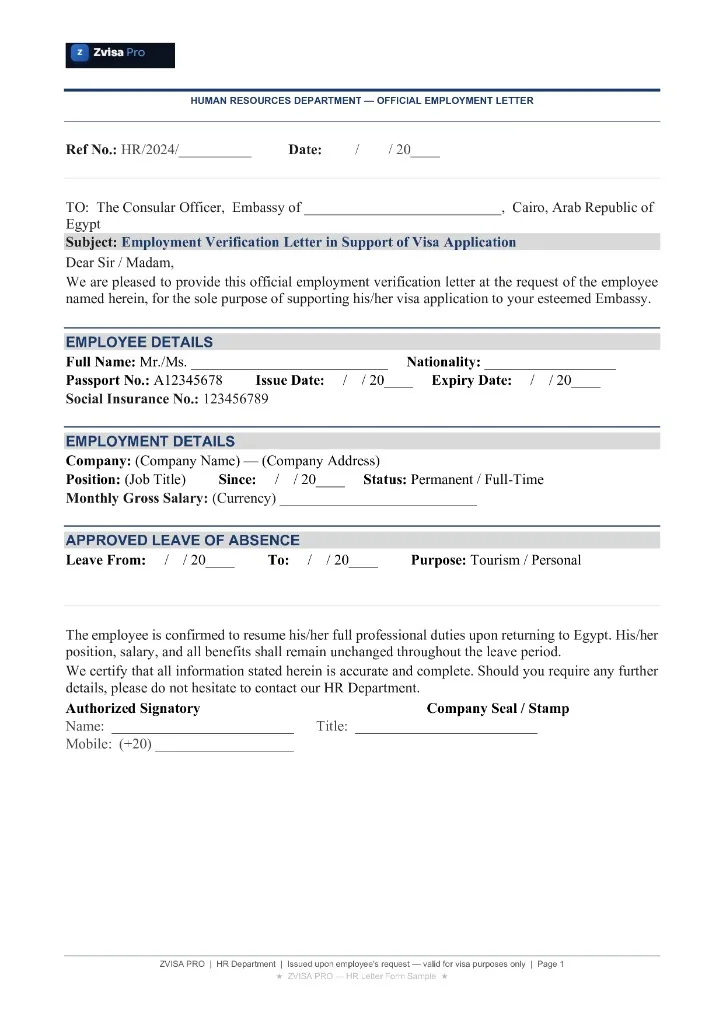
The HR Letter, also known as an employment letter or employer letter, is one of the core supporting documents requested by many embassies during visa applications, especially for Schengen, tourist, and visitor visas.
This document helps the visa officer confirm that the applicant has real employment, stable income, and a professional tie to the country of residence. In practical terms, it strengthens the application and supports the idea that the applicant has a credible reason to return after the trip.
It is an official letter issued by your employer and addressed to the embassy or visa file, confirming your employment status and relevant professional details.
Essential Information the Letter Should Include
| Item | Explanation |
|---|---|
| Employee name | The full name should match the passport exactly or as closely as possible. |
| Job title | Your current professional role within the company. |
| Date of employment | The start date of your job. Longer employment history usually adds credibility. |
| Monthly salary | Your gross or regular salary amount. It should be realistic and consistent with your bank statement. |
| Approved leave period | The exact dates of leave that cover the intended travel period. |
| Return-to-work confirmation | A clear statement that you are expected to return to resume work after the trip. |
Why Do Embassies Review the HR Letter So Carefully?
A clear and well-structured employer letter acts as one of the strongest indicators of application stability because it proves several things at once:
- You work for a real and identifiable company.
- You have regular income that supports the financial side of the application.
- Your leave was officially approved by your employer.
- Most importantly, you have a professional obligation that supports your return after travel.
Golden Conditions That Help Avoid Refusal
For the letter to be persuasive and professionally credible, it should meet the following standards:
- Printed on the company’s official letterhead.
- Preferably written in English to avoid translation issues and unnecessary cost.
- Signed by HR, management, or another authorized company representative.
- Stamped with the official company stamp whenever available.
- It should include contact details such as company phone number, address, and email in case the embassy wishes to verify it.
- Data consistency matters: if the salary in the letter does not match salary transfers or general financial evidence, credibility can be damaged quickly.
Common Mistakes That Weaken the Letter
| Mistake | Why It Is a Problem |
|---|---|
| Missing salary information | It weakens the financial picture and makes the letter less useful. |
| No leave dates | The embassy cannot connect the letter to the travel plan clearly. |
| Unsigned or unstamped letter | It may look informal or incomplete. |
| Name mismatch | Differences from the passport can create avoidable doubts. |
| Unrealistic salary declaration | If it conflicts with bank records, the file loses credibility. |
| No company contact details | Verification becomes difficult. |
Why an English Template Helps
Many samples available online are either weak, incomplete, or poorly structured. A clean English template makes it easier for HR departments to prepare the document correctly, and it reduces the risk of translation inconsistencies or missing details.
What matters most is not decorative wording. What matters is that the letter is formal, clear, internally consistent, and aligned with the rest of the visa file.
Download a Ready-to-Use Professional HR Letter Template
To make the process easier, we prepared a professional editable HR letter template in English. You can provide it to your HR department, adjust the company details, and print it on official letterhead before submission.